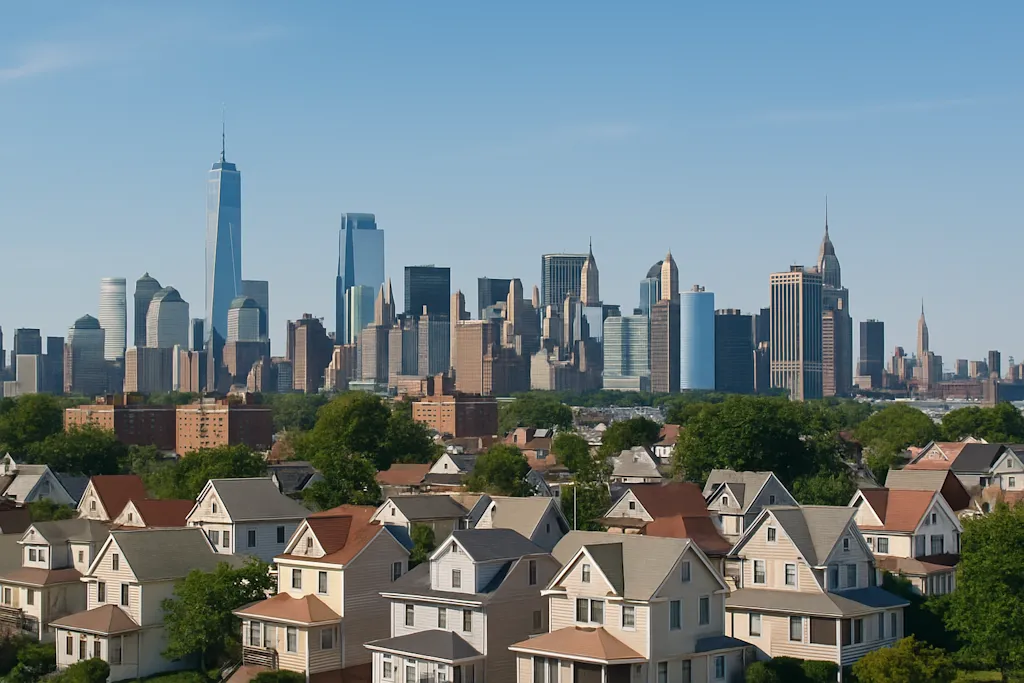
The real estate market in New York State is one of the most diverse in the United States. From the dense urban core of New York City to quiet suburban neighborhoods and scenic upstate towns, price differences are striking. These regional variations shape buyer behavior, investment strategies, and long-term market trends.
1. New York City Remains the Price Leader
New York City continues to dominate as the most expensive housing market in the state.
– Manhattan leads with some of the highest price-per-square-foot figures in the country.
– Brooklyn and Queens have experienced steady price growth over the past decade, driven by strong demand and limited land availability.
– The Bronx and Staten Island remain more affordable but still significantly higher compared to most upstate markets.
Urban convenience, job concentration, and global demand keep prices elevated despite economic fluctuations.
2. Suburban Counties Offer Relief but Are Still Costly
Counties surrounding New York City—Westchester, Nassau, and Suffolk—have also seen rising home prices. Many residents moved to the suburbs during and after the pandemic, seeking larger homes and quieter communities while still staying within commuting distance of NYC.
Although these areas are more affordable than Manhattan or Brooklyn, they remain above the state’s average home price.
3. Upstate New York: Wide Range of Affordable Opportunities
Upstate regions provide a completely different picture.
– Cities such as Buffalo, Rochester, Syracuse, and Albany offer some of the most budget-friendly housing options in the state.
– Smaller towns and rural areas provide even lower prices, attracting first-time buyers, remote workers, and investors looking for long-term value.
The combination of lower prices and stable rental demand has led to increased investment interest in upstate markets.
4. Migration Trends Are Reshaping Prices
Internal migration continues to influence pricing:
– Some NYC residents have moved to the suburbs or upstate, pushing up demand in previously quieter areas.
– College towns and mid-sized cities are seeing new growth due to remote work and lower living costs.
– Meanwhile, some high-priced neighborhoods in NYC experienced slight slowdowns as affordability challenges grew.
These shifts create a more balanced statewide market but also increase competition in emerging regions.
5. Impact of Mortgage Rates on Buyer Activity
Fluctuating mortgage rates affect buyers across all regions:
– In high-price NYC markets, even a small rate increase significantly affects monthly payments.
– In upstate regions, affordability remains stronger, allowing buyers more flexibility despite rate changes.
As a result, markets with moderate pricing have remained more stable.
6. Outlook for 2025
Economists expect moderate price growth across most of New York State.
– NYC prices may stabilize but remain high due to global demand and limited inventory.
– Suburbs are likely to maintain strong activity as families seek space and good schools.
– Upstate New York may continue attracting buyers with affordability and growing job markets.
With its mix of luxury, suburban, and affordable regions, New York State remains one of the most complex and dynamic real estate markets in the U.S.

 English (US)
 Spanish