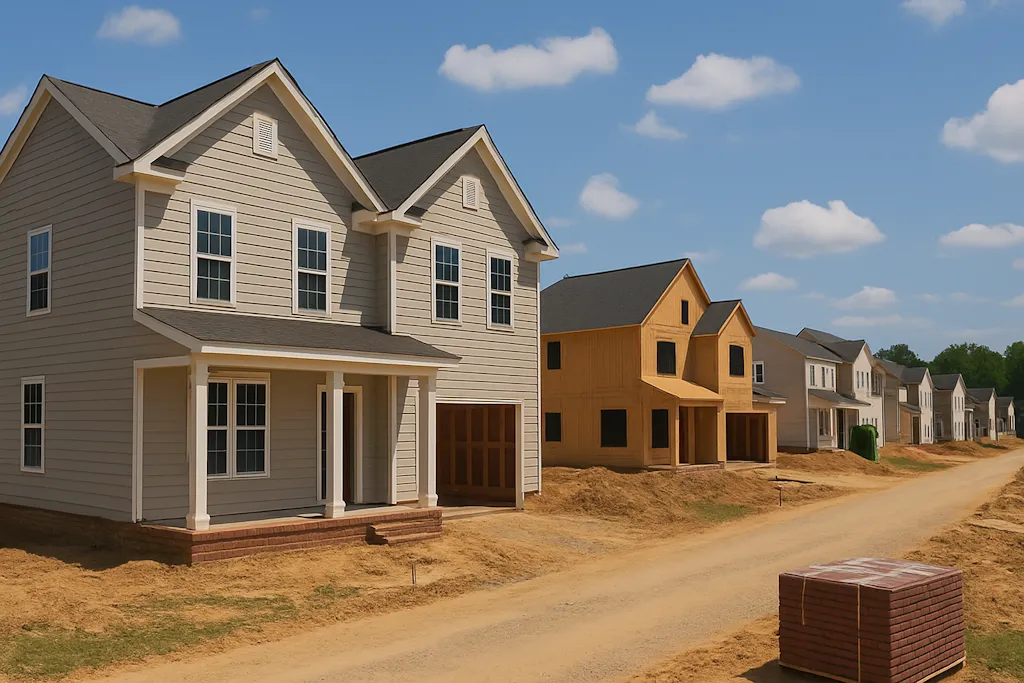
The U.S. housing market is experiencing a noticeable increase in new construction activity, as homebuilders work to meet the ongoing demand for affordable housing. Despite higher interest rates and increased material costs, construction companies are pushing forward with new projects across the country.
According to recent market data, the number of newly started residential units has grown steadily over the past several months. This trend is particularly strong in states such as Texas, Florida, North Carolina, and Arizona—regions that continue to attract new residents due to job opportunities, warmer climates, and lower taxes.
1. Rising Demand for Affordable Homes
With many buyers priced out of existing homes, the demand for new entry-level houses has grown sharply. Builders are responding by launching projects focused on smaller, more efficient properties that offer lower prices and reduced maintenance.
2. Supply Chain Improvements
While the construction industry faced significant delays during the pandemic, supply chains have largely stabilized. Building materials such as lumber and steel are now more accessible, helping developers speed up project timelines and control costs.
3. Migration and Population Growth
High population growth in the southern and western regions of the U.S. continues to put pressure on housing supply. Cities such as Houston, Tampa, Charlotte, and Phoenix are seeing rapid suburban expansion as developers purchase land and plan long-term residential communities.
4. Outlook for 2025
Experts predict that the pace of construction will remain strong in the upcoming year. Although affordability challenges persist, the growing inventory of new homes may help balance the market and provide relief for first-time buyers.
The increased activity in new construction is a positive sign for the broader real estate market, signaling rising confidence among builders and sustained demand among buyers.





 English (US)
 Spanish