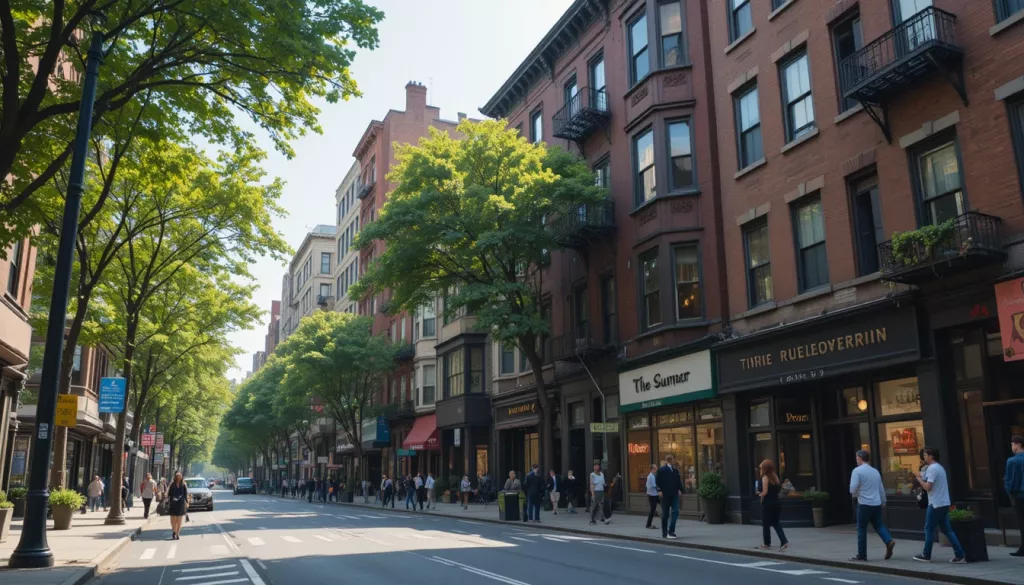
New York City is made up of hundreds of unique neighborhoods, each with its own personality, lifestyle, and pace.
Even a great apartment can feel wrong if the surrounding area doesn’t match your daily needs.
That’s why checking the neighborhood is one of the most important steps in the NYC rental process.
Here’s a clear and practical guide to evaluating any NYC neighborhood before moving in.
A neighborhood can feel completely different in the morning, afternoon, and evening.
If possible, walk around during:
Early morning (commute hours)
Midday (general activity)
Evening and late night
This helps you understand:
Noise levels
Street activity
Safety
Lighting
Traffic and foot traffic patterns
Daytime charm can sometimes hide nighttime problems — or vice versa.
Safety is one of the top concerns for NYC renters.
You can explore official crime statistics and community reports through:
NYC Open Data
NYPD precinct crime maps
Community board reports
These tools offer insight into trends, not just one-time incidents.
Also pay attention to:
Street lighting
Pedestrian activity
Condition of buildings
Presence of security cameras in the area
Your personal comfort level is the most important factor.
NYC is built around transit. A great apartment far from transportation can become a daily challenge.
Check:
Nearest subway lines
Travel time to your job or school
Bus routes
CitiBike stations
Weekend schedules (some lines have reduced service)
Many renters use Google Maps to test commute times at real hours.
A convenient neighborhood should offer easy access to everyday needs:
Supermarkets and groceries
Pharmacies
Laundromats or dry cleaners
Coffee shops and restaurants
Gyms and parks
Banks and postal services
Being close to essential services saves time and improves daily life.
NYC has noise — but some blocks are significantly louder than others.
Check for:
Bars and nightlife venues
Construction zones
Fire stations or ambulance routes
Bridges and highways
Train tracks
A quiet street two blocks away can be much more comfortable than one right next to nightlife.
If you can’t visit in person (or want more information), use online tools such as:
Google Street View
Google Maps (peak traffic view)
Local Facebook groups
Reddit neighborhood forums
Community newsletters
These resources can give honest, firsthand impressions.
The block matters just as much as the neighborhood.
Look at:
The building entrance
Cleanliness of the street
Condition of sidewalks
Neighboring buildings
Foot traffic right outside
Sometimes a building sits on a quiet, pleasant block even in a busy neighborhood — or the opposite.
School quality affects safety, stability, and neighborhood environment.
NYC school zones often correlate with quieter, more residential areas.
NYC neighborhoods are rich in culture and identity.
Consider:
Whether the vibe matches your lifestyle
How residents interact
Whether the area feels welcoming
The pace — fast, quiet, family-oriented, artistic, etc.
A neighborhood should feel like a place where you can imagine yourself living comfortably.
Your impression matters.
If the neighborhood feels right — safe, convenient, and welcoming — it probably is.
If something feels off, don’t ignore it.
With hundreds of neighborhoods to choose from, you will find one that fits your lifestyle.

 English (US)
 Spanish